

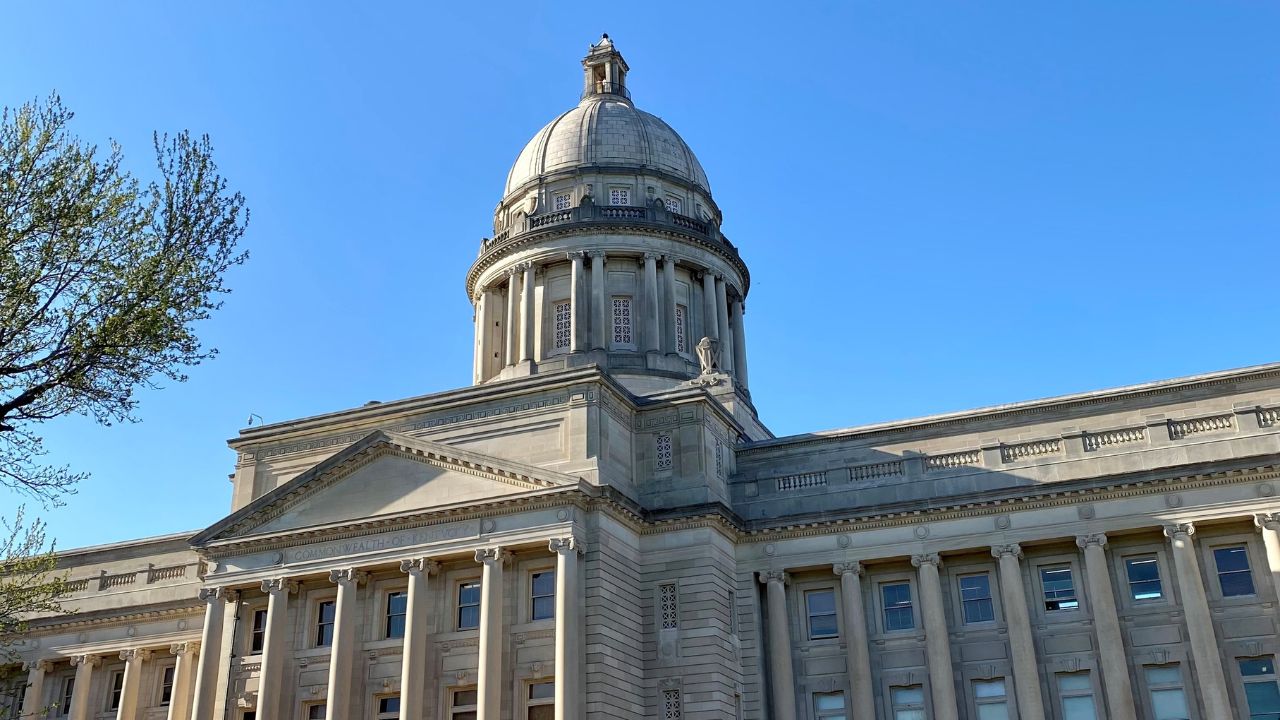
When the average person thinks of our political system, his mind usually goes straight to Washington, D.C. What is the President up to or what is the newest topic up for debate in the Senate? National media almost exclusively focuses on issues that overlap with Washington, driving even more attention in that direction. However, this focus is largely a misplaced priority for those who truly want to make a difference in policy and government. To maximize their impact, grassroots conservatives should focus their time and attention on impacting politics at the state and local levels.
Our Founding Fathers designed our political system to go from the ground up, emphasizing what happens locally and limiting the role of Washington, D.C. Congress and the executive branch were supposed to be limited in their powers, focused primarily on national defense, diplomacy, immigration, postal services, and trade. Meanwhile, state governments had broad powers to govern in areas of education, economic policy, social policy, and public protection. U.S. Supreme Court Justice Louis Brandeis, a Kentucky native, popularized the phrase “laboratories of democracy” when referring to state governments, explaining that states have the freedom to test out new innovative policies and ideas without binding the entire country.
Unfortunately, bad U.S. Supreme Court decisions have drastically expanded the size, scope, and power of the federal government far past what the Constitution allows, departing from the framework that the Founders established. Few areas of American life remain untouched by federal overreach. A current bill to regulate college sports is one example of Congress attempting to intervene beyond its constitutional authority. This unfortunate reality has driven the shift in attention away from the states and toward D.C. One might think this is an argument in favor of paying attention to D.C. However, when examining recent history, conservative policy wins have not started in Washington. They have started in states like Kentucky.
In recent years, public opinion and policy have shifted away from the transgender agenda. But for much of that time, politicians in Washington were scared to talk about “transgender issues.” The subject was simply too controversial to touch. However, leaders at the state level took action to protect kids from transgender mutilation and girls’ sports from biological males. Now 27 states have laws prohibiting “gender transitions” on kids and keeping men out of girls’ sports. The U.S. Supreme Court recently upheld both of those policies as constitutional. Spurred on by these policy wins, the Trump Administration has taken actions to crack down on transgender ideology with a line of executive orders, granted those actions are subject to repeal under the next Democrat administration since the Republican majority in Congress has refused, to date, to codify the orders into permanent law. Conservatives would not have achieved this major shift in policy on transgender issues without action at the state level. And this is not the only area where state wins have driven policy discussions.
For decades, conservatives have fought two other major policy battles at the state level: gun rights and school choice. In 2000, most states tightly restricted concealed carry, making it difficult to carry a firearm for self-defense. Today, 29 states have eliminated the permit requirement altogether—a dramatic shift for most of the country. These wins have built momentum for repealing unconstitutional federal gun regulations, and they have produced litigation in which courts struck down gun control laws at both the state and federal levels.
A similar rapid expansion of school choice programs has also occurred since the turn of the century. In the 1990s, Wisconsin created the first modern school choice program in Milwaukee, which allowed school dollars to follow the kids. Other states started to follow in the early 2000s. Today, 32 states have school choice programs, ten of them universal. This momentum created an appetite in Washington, D.C., to create the first federal school choice program—the Education Freedom Tax Credit. Neither the gun issue nor the school choice issue would have the successes that we see today without action from the states.
On all three of these issues, grassroots conservatives put their time and effort into achieving change at the state level, which then had a snowball effect for other states and eventually the federal government. If activists had ignored the states and pushed only at the federal level, there would likely be little to no progress on any of them today.
The same holds true beyond policy. In elections, an individual can make far more of an impact at the state and local levels. A primary election for U.S. House in Kentucky will typically have around 60,000–70,000 voters participating. A U.S. Senate primary will be in the hundreds of thousands. A single individual cannot make much difference in those types of races—money will be far more important. However, a primary for state house will usually have 3,000–4,000 participants. A small group of volunteers can swing the results of a race like this, even if the opposition has more money.
If you want to get involved in politics, focus your time and attention on state and local elections and policy. You will see much more fruit from your labor and have the opportunity to make a lasting difference. That is impossible to achieve by focusing too much time and attention on Washington, D.C.
Click here to view and download the PDF of the print version of the Citizen paper.